Your Vendors Change Their Cookies Without Telling You. We're Fixing That.
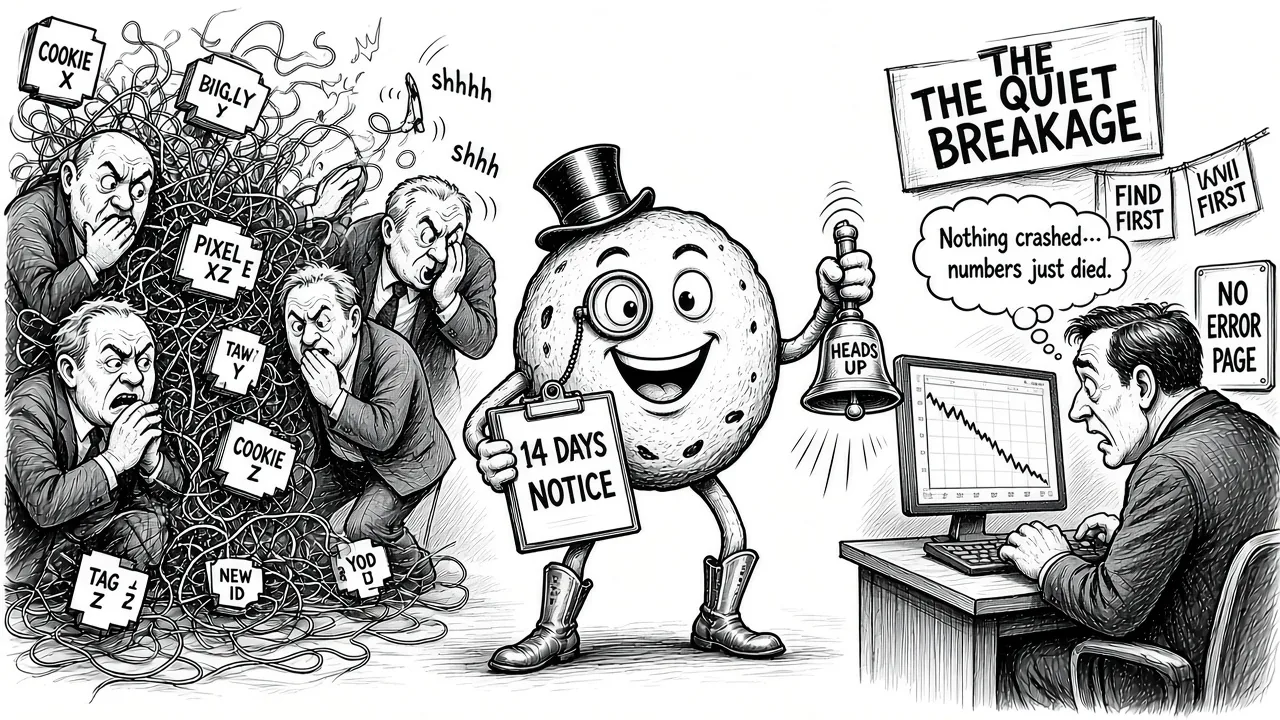
Nothing crashed. No error page. No angry email.
Your conversions just dipped. Then attribution got weird. Then a client asked why their ad platform says one thing and analytics says another.
Three weeks later somebody figures it out. A vendor renamed a cookie. Or changed an ID format. Or moved a pixel from one domain to another. Nobody told you. Your consent rules were still pointed at the old name, so the new one either fired without permission or didn't fire at all.
That's the quiet breakage. I've been online since CompuServe. I've built sites, funnels, ad stacks, and the plumbing that ties them together. And this one problem shows up over and over, in every kind of business, on every kind of stack.
It's not a bug in your site. It's a gap in how this whole industry works.
Why Banners and DPAs Don't Solve It
Most people think cookie compliance is a banner. Pop it up, get a click, done.
The banner is the front door. It's not the house.
Behind that banner is wiring. Every "Accept" and "Reject" has to map to real cookies, real tags, real pixels. Your consent tool has to know that cookie X belongs to vendor Y, that it's marketing and not essential, and that it should stay off until someone says yes.
That map only works if the names stay the same.
They don't. Ad platforms, analytics tools, chat widgets, and affiliate networks change their scripts all the time. Usually for good reasons on their end. Rarely with any warning on yours.
So what about the paperwork? The data processing agreement. The vendor terms. Those documents talk about what data gets collected and why. They almost never say: "We'll tell you before we change the cookie names your setup depends on."
That's the hole.
Today the industry's answer is scanners. Crawl the site, find what changed, flag it. I like scanners. We use them. But a scanner tells you after the fact. The change already shipped. The data is already off. Depending on what fired, you may have already set cookies a visitor said no to.
Finding out fast is better than finding out slow. Finding out first is better than both.
What We're Shipping
iQCookie is adding a provider notice requirement to how we handle third-party vendors.
Here's the idea in plain terms:
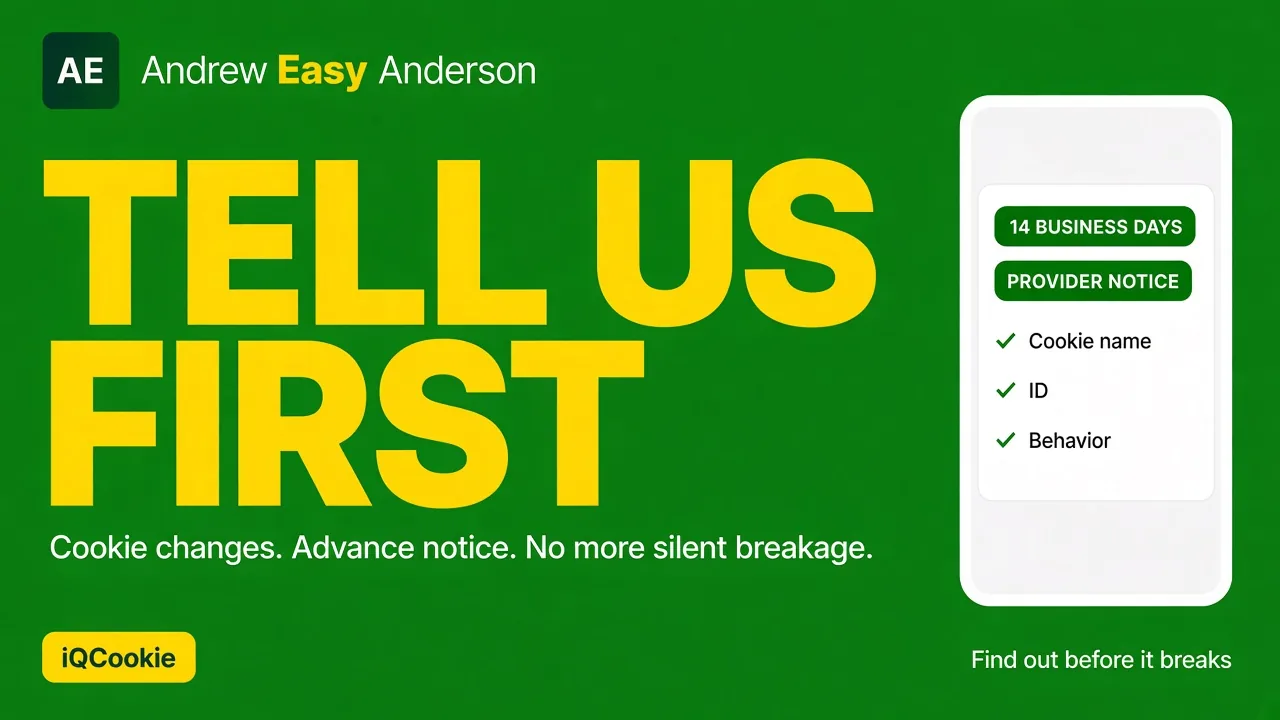
The vendors you depend on give advance notice before they change the cookies you depend on. Our standard is 14 business days. Name changes. ID format changes. New domains. Changes in what a cookie does or how long it lives. If it touches your consent wiring, you should hear about it before it goes live.
Here's how it works for the people using iQCookie:
- You see who you depend on. iQCookie already knows the cookies and providers on your site. Now those providers get tied to a clear expectation: tell us before you change.
- You get a ready-to-use notice standard. Plain language you can put in front of vendors and partners. Not a legal brief. A simple, reasonable ask: give us a heads-up first.
- Notices land in one place. When a provider tells you a change is coming, it gets logged against the cookies and categories it affects.
- You fix it before it breaks. You update your consent mapping and tracking setup on your schedule. Not in a panic after the numbers go sideways.
For agencies, this is big. If you run 15 or 50 client sites, one vendor change can ripple across every one of them. Today you find out when a client calls. With advance notice, you find out first, fix it across the board, and look like you saw it coming. Because you did.
For the client, it means fewer mystery drops. Cleaner attribution. Consent that actually matches what's firing. And a lot fewer "why didn't anybody catch this?" meetings.
Scanners still matter. We'll keep them. Notice up front plus monitoring behind it is a much stronger setup than monitoring alone.
Why We're Putting a Stake in the Ground First
I haven't seen anyone else ask for this. Not the big consent platforms. Not the enterprise tag managers. Everybody watches for changes. Nobody asks for notice.
I think that's backwards.
In almost every other part of a business relationship, notice is normal. Your landlord gives notice. Your bank gives notice. Your software vendor tells you before they kill an API. But the cookies that run your tracking, your attribution, and your compliance? They change in the dark.
iQCookie was built for the US market. All 50 states, each with its own rules and more coming every year. It's under 20kb and running on 40+ sites. We built it small and fast because we were tired of bloated tools that made sites slower and compliance harder.
This feature comes from the same place. A real problem. A simple fix. Nobody else doing it.
Will every vendor jump on board day one? No. Some will. Some will need a nudge. Some will need their customers asking for it. That's how standards start. Somebody has to say it out loud first.
So we're saying it: if you change the cookies we depend on, tell us first.
To be clear, this isn't legal advice, and it doesn't replace your contracts or your lawyer. It's an operating standard. A better way to run the relationship between the sites that use these tools and the companies that make them.
Want to See It?
If you run sites, run an agency, or just got burned by a silent cookie change, I'd like to show you how this works.
Take a look at iQCookie to see the feature and the rest of what we've built for US cookie compliance. Or reach out to me directly. I'm happy to walk through your setup and tell you where the quiet breakage is likely hiding.
Your vendors are going to keep changing things. You might as well hear about it first.
— Easy
Find the quiet breakage in your setup

FAQ
What is the quiet breakage?
A vendor renames a cookie, changes an ID format, or moves a pixel to a new domain without telling you. Your consent rules still point at the old name, so the new one either fires without permission or doesn't fire at all. Nothing crashes — conversions dip, attribution drifts, and somebody figures it out weeks later.
Don't cookie scanners already catch this?
Scanners catch it after the fact. The change already shipped, the data is already off, and depending on what fired, you may have already set cookies a visitor said no to. Finding out fast is better than finding out slow. Finding out first is better than both — which is why iQCookie pairs advance notice with monitoring instead of monitoring alone.
What is iQCookie's provider notice requirement?
The vendors you depend on give advance notice before they change the cookies you depend on — the standard is 14 business days. It covers name changes, ID format changes, new domains, and changes in what a cookie does or how long it lives. Notices get logged in one place against the cookies and categories they affect, so you fix your consent mapping on your schedule.
Is the 14-business-day notice standard legally binding?
No. It isn't legal advice and it doesn't replace your contracts or your lawyer. It's an operating standard — a better way to run the relationship between the sites that use these tools and the companies that make them.
What does advance cookie-change notice mean for agencies?
If you run 15 or 50 client sites, one vendor change can ripple across every one of them. Today you find out when a client calls. With advance notice, you find out first, fix it across the board, and look like you saw it coming — because you did.